


Perspective
An AI Agent Acts For You
September 5, 2026
What an AI agent is, why one is usually a team of them working to an org chart, what a marketing build looks like inside, and the parts of the job that stay with you.

Industries · Yacht Management
Your fleet clears through agents who carry legal responsibility, the office answers to two privacy regimes, and the port authority you file into in Singapore reads certificates with large language models now. What AI is already doing across the office and the fleet, and the safest way to hold one standard across both.
Ten vessels, ten owners, ten flags, and one management contract with your name on its pages. The standards you run were adopted the hard way: drafted once at the office, then walked through ten budget cycles, ten owners' reps, ten flag interpretations. Now AI has arrived the way weather arrives, quietly and then all at once.
The record so far
tracked across 25 jurisdictions
Every founding document reviewed by the legally trained founder before delivery.
Documents usually within two business days.
Training certificates independently verifiable at southernsky.ai/verify.
Where this sits for you
An owner report summarised before it went out. A contract clause pasted into a chatbot for a plain-English read, and ten crews each carrying their own informal practice. You can produce any certificate for any vessel in ninety seconds; ask about AI use across the fleet and the register is empty. The instinct that built your safety system covers this too: one written standard, held by the management company, adopted vessel by vessel, with a named check before anything AI-assisted reaches an owner, a flag state or an insurer. It starts with knowing your position.
A visiting vessel enters Hong Kong through an appointed local agent who carries legal responsibility, the 182-day clock decides which regime each hull answers to, and the Marine Department, Hong Kong's maritime regulator, has run electronic certificates and logbooks with full legal effect for Hong Kong-registered ships since August 2023.
Thailand's 2025 reform lets foreign-flagged yachts of 24 metres and over hold a one-year charter licence, with charter fees carrying VAT and 5 percent corporate income tax through an appointed fiscal representative and licensed member agents handling the ministry applications. The licence, the fiscal representative and the agent file each renew on their own schedule, and crew visas run 30 days against import permits of up to 30 months. The office absorbs every renewal in between.
Entry runs on the online Vessel Declaration, a customs temporary import of up to three years filed through the YachtERS system, and foreign-flagged vessels may not charter in Indonesian waters. The structuring conversation happens before the boat ever goes south.
Singapore's privacy law, the PDPA, binds organisations handling personal data in Singapore whether or not they are incorporated there, with penalties up to S$1 million or 10 percent of annual Singapore turnover, whichever is higher. An office holding owner identities, crew records and financial flows is squarely inside it.
Nearly every hull you manage sits inside its own single-purpose owning company, with its own directors, flag, insurers and owner's rep. Your DOC is company-level and your procedures are company-authored, so fleet-wide policy gets drafted once, then sold, adapted and adopted vessel by vessel, because no fleet-wide budget line exists to carry it.
The DPA function concentrates personal, round-the-clock liability, with escalation chains auditors expect to see functioning under pressure. Paris MoU detentions rose to a 4.18 percent rate in 2025, and the top deficiency categories are exactly the files the management office owns. Cyber risk already sits inside the audited SMS under MSC.428(98), which is also the natural docking point for a written AI position.
An average yacht replaces 5.6 junior crew a year at €10,000 to €20,000 per departure, and a crew change is a management-office event: the SEA under the flag's law, STCW verification, medicals, and payroll that answers to the flag, the governing law, the vessel's location and the seafarer's nationality at once. Turnover also un-teaches whatever the last training taught.
Crew takes 30 to 40 percent of a vessel's running cost; management fees take 3 to 5. You administer the entire budget while earning the smallest visible line on it, and the family office reads the report you wrote about the money you approved. Every owner report is an invitation to challenge a line.
Certificates live on personal laptops, WhatsApp swallows tasks, spreadsheets carry core processes, and the monthly owner PDF is assembled by hand from all of it. Multiply by ten vessels, each with a stack its own captain chose, and the office's systems sit on top of ten inconsistent ones below.
Documented Work

5-month prototype · 85% extraction precision · Unexpected findings in source documents · Global vessel operator platform
Built and tested across a five-month prototype period, the system achieved 85% extraction precision on unstructured OEM documents with no standard format, and surfaced information that had not come up in manual review of the same source material.
Read full engagement
Small team · Multiple organisations · 7 recurring operational themes · 10 strategic goals mapped · Foundational recommendations implemented
Seven recurring operational themes identified consistently across every organisation in a multi-organisation maritime portfolio, addressed through a phased roadmap covering 10 strategic goals across two solution streams: workflow automation and AI-powered support.
Read full engagementThe Opportunity
AI reaches the Asia-Pacific management office from the regulator's side first. The port authority the Singapore office files into reads certificates with large language models and turned three days of processing into minutes, and Hong Kong's privacy regulator published the region's first AI-specific data protection framework, written for organisations that procure and deploy AI systems, which is what a vessel-management platform upgrade now amounts to. The office work itself reads the same as it does in Monaco: owner reports summarised across currencies, charter clauses read in plain English, one office standard adapted per vessel, each drafted for a named check before it reaches an owner, a flag state or an authority. The regional difference is cadence, resident fleets, day programmes and short-notice movements putting more guest lists and more filings through the office per vessel-year, and both of the region's reference frameworks are voluntary, published and citable, so an office that documents its practice is aligned with the region's own manuals rather than out ahead of them alone.
Owner reports and reconciliation
The month-end owner report, assembled by hand from hundreds of transactions across currencies, gets drafted and summarised in a fraction of the time, with the manager checking the figures against the source before it reaches the family office.
Contract plain-English reads
A MYBA charter clause pasted for a plain-English read gets explained in minutes, with the manager confirming the reading against the contract before acting on it and keeping owner detail out of any public tool.
Per-vessel policy adaptation
A standard drafted once at the office gets adapted to each vessel's flag and owner in far less time than a manual rewrite, with the manager approving each version before it is adopted aboard.
SEA and crew admin
Seafarer employment agreements reissued at a flag change, and the crew correspondence around them, get drafted against the new flag's requirements, with a person checking the terms before issue.
Audit evidence and NCR close-out
Near-miss reports, internal audit findings and the evidence an auditor expects get drafted and organised for the DPA, with the DPA reviewing each item before it stands as a record.
Crew induction material
Induction notes that carry the AI standard to a new crew get drafted for each vessel, with the manager approving them so the standard survives the turnover.
These are the workflows the prompt library and the training days stand up, under the standard the Fleet Framework and the per-vessel register set.
Where to start
The fleet engagement: AI-use audit across vessels, risk classification, the manager-owned Fleet Framework and the adoption sequence.
The position stays aligned between audit windows.
Crews inherit the standard through induction, with verifiable certificates.
The fleet's governance home that survives crew changes.
Reading

June 2026
What the frameworks say, how far they reach, and what organisations can do now.
2026
The AI management system standard, read for maritime operators.
September 5, 2026
What an AI agent is, why one is usually a team of them working to an org chart, what a marketing build looks like inside, and the parts of the job that stay with you.
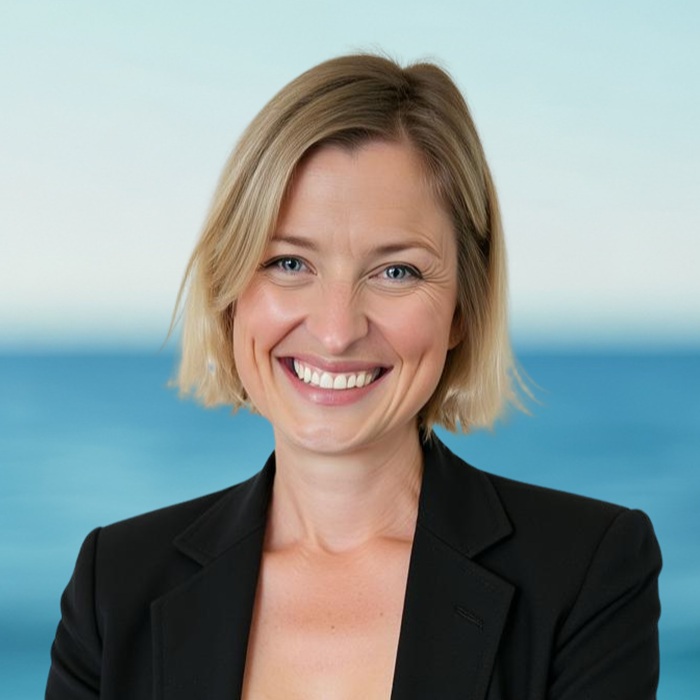
Written from inside your world
Kristina Agustin
Founder & Principal Digital Navigator, Southern Sky AI
20+ years in international superyacht and maritime operations. Legally trained (LLB, Graduate Diploma of Legal Practice). AI educator and consultant. ATSE Elevate Scholar 2026.
Questions
Weekly insights on AI in maritime, delivered every Sunday.
Want to see how AI reads your website? Run the AI Readability Check.
Prefer to talk it through first? Book an introductory conversation.