Industries · Maritime Professional Services

AI for US maritime lawyers, surveyors and agents.

Standing orders court by court, an ethics opinion in your home state, and AI questions on the malpractice renewal: what a written position answers for a US practice, and the safest way to build one.

A maritime practice runs on documents other people rely on. Survey reports that decide a purchase, advices that decide a claim, disbursement accounts that clear a port call. The signature at the bottom is yours, and the professional indemnity policy behind it renews every year.

AI has already reached most practices through the software they run. The practice management system drafts now. The survey platform writes report sections from field photos. A junior pastes a clause into a public chatbot because it is quick. Each of these is useful, and each one changes what you would need to say if a court, a client or an underwriter asked how the document was made.

The courts have published their rules. The insurers have written their questions. A small practice can hold a clear, written answer to both, and it takes less time to build than one contested file.


The record so far

221obligations

tracked across 25 jurisdictions

  • Every founding document reviewed by the legally trained founder before delivery.

  • Documents usually within two business days.

  • Training certificates independently verifiable at southernsky.ai/verify.

Start Here

Run the AI Baseline Report for your practice. Nineteen plain questions, about five minutes, and it reads you back where AI already sits in your practice, the rules that already apply to you, and the moves that matter most, ranked from the top. It is written for the person whose name is on the letterhead.

Get your baseline

Where this sits for you

The pressures in your world

  1. ABA opinion on AI ethics

    US

    ABA Formal Opinion 512, issued by the American Bar Association, the national professional body of US lawyers, on 29 July 2024, reads generative AI into six existing duties: competence, confidentiality, client communication, candor toward the tribunal, supervision and reasonable fees.

  2. Standing orders, court by court

    US

    There is no single federal rule on AI in filings; there are standing orders and local rules court by court, tracked publicly by Law360 and Ropes & Gray. The Western District of North Carolina requires a certification with every filing that no unapproved AI was used in preparation and that every citation has been human-checked.

  3. Your state bar has an opinion too

    US

    Florida's Ethics Opinion 24-1 arrived in January 2024, Texas Opinion 705 in February 2025 requires human oversight of AI-generated work to keep fabricated citations out of court, and California and New York carry guidance of their own. A US practice answers to one national opinion, a home-state opinion and the judge's rule at once.

  4. The malpractice market moved in one cycle

    US

    CNA, the largest legal malpractice carrier in the US, sends supplemental AI questionnaires at renewal, and WTW's Insurance Marketplace Realities 2026 describes the year to January 2026 as a structural break in professional liability: silent AI cover giving way to affirmative but conditioned cover, exclusions, or governance-contingent terms.

  5. Survey software drafts findings now

    US

    AI-first survey report tools are selling directly into the US surveyor market with standards-aware findings language. If an AI-drafted condition report later becomes expert evidence, the disclosure question arrives with the subpoena, and the answer is the practice's written record of what drafted the report and who checked it.

  6. Succession has few candidates in the building

    The marine industry's median age is 49.5 with nearly 40 percent of the workforce over 50, and marine surveying ages with the seafarer cohort that feeds it. A one-to-three principal practice with no internal successor is the modal firm in this corner of the profession.

  7. Fixed fees make each extra hour yours

    Sophisticated clients now write AI-efficiency discounts into standard engagement terms, panel rates hold surveyors to fixed fees, and lawyers lose nearly half the non-billable day to administration. Each hour a report runs past the estimate comes out of the principal's margin.

Documented Work

From the Log Book

AI Training

3 role-based workshop days, designed from a 12-department audit · 18 people certified, from maintenance and marine to finance and the executive team · Every participant left with a working AI setup and a reusable Skill built on a real task from their own role · Weeks later, reported publicly by the client: the team using AI more, sharing wins, and a real shift in the day to day

Eighteen people, ten departments, one shared standard for how AI gets used across the organisation.

A twelve-department audit produced three role-based workshop days that certified eighteen people across ten departments, with the CHART quality method and the data rule embedded across the team and every certificate carrying a public verification page.

Read full engagement
AI Training

One-day executive foundation session, delivered one-on-one, designed around a tightly controlled corporate IT environment where every tool runs in the browser · A monthly management accounting and insurer reporting workflow, sixteen reports each month, run end to end through the CHART quality method and captured as a reusable skill · A take-home toolkit and a short explainer video, so everything built on the day stays usable after it

A regulated insurance business, and AI capability built one executive at a time.

A one-day, one-on-one foundation session with a senior executive in the marine insurance sector: a governed AI platform with a commercial data agreement behind it, a working environment built from the executive's own context, and a monthly reporting workflow of sixteen insurer reports run end to end and captured as a reusable skill.

Read full engagement

The Opportunity

What AI is already doing

Thomson Reuters puts law-firm attorney generative-AI use in the United States at 41 percent, and the average US lawyer bills about 2.9 hours of an eight-hour day, so the drafting hours AI returns go straight to the number the practice already measures. Used under a review rule, AI already does defined work across a maritime practice, and each task below carries a named human check.

The same written position that sets those checks is the document the renewal questionnaire, the standing order and the state bar opinion each ask about in their own words. One office policy, one verification step, one answer that holds whichever courtroom asks.

First-draft advices and memos

Governed AI produces the first draft of an advice memo or a report section from the matter file, which shortens the drafting block that runs into the evenings, and the principal reviews and signs it under the review rule the policy sets before it leaves the practice.

Matter and file summaries

AI condenses a matter file or a bundle of class records into a working summary, which gets the fee-earner to the issues faster, and the fee-earner checks it against the source before relying on it.

Disbursement narratives

For an agency, AI drafts the narrative on a port disbursement account from the underlying entries, which clears the port call sooner, and a person reconciles it against the ledger before it reaches the principal.

Survey report sections

The survey platform drafts report sections from field photographs and notes, which returns drafting time to the surveyor, and the surveyor confirms each finding against what they saw before the report is issued.

PI renewal answers

AI assembles a first draft of the written answers an insurer's AI question set now asks for, which turns a blank proposal form into a starting point, and the principal confirms each answer reflects actual practice before submission.

These are the workflows the prompt library and the training stand up, under the standard the documents set.

Where to start

Where to start, and where it leads.

  1. Baseline

    See what AI could do for your organisation. The AI Baseline Report takes twenty questions and about five minutes, and reads back the use cases returning hours in organisations like yours, the rules that already apply to you, and the moves that matter most, ranked from the top.

  2. Governance Essentials

    The written policy and position, mapped to your obligations, and the working start for the practice: a prompt library that starts the first governed workflow under the review rule your policy sets, 90 days of team education, a recorded briefing, a 30-minute walkthrough call and 30 days of email support. USD $690 founding, then USD $990.

  3. The training day

    CPD-ready, the practice in one room.

  4. Blueprint

    For the firm with departments.

Prefer the done-with-you path? Request the Engagement Guide.

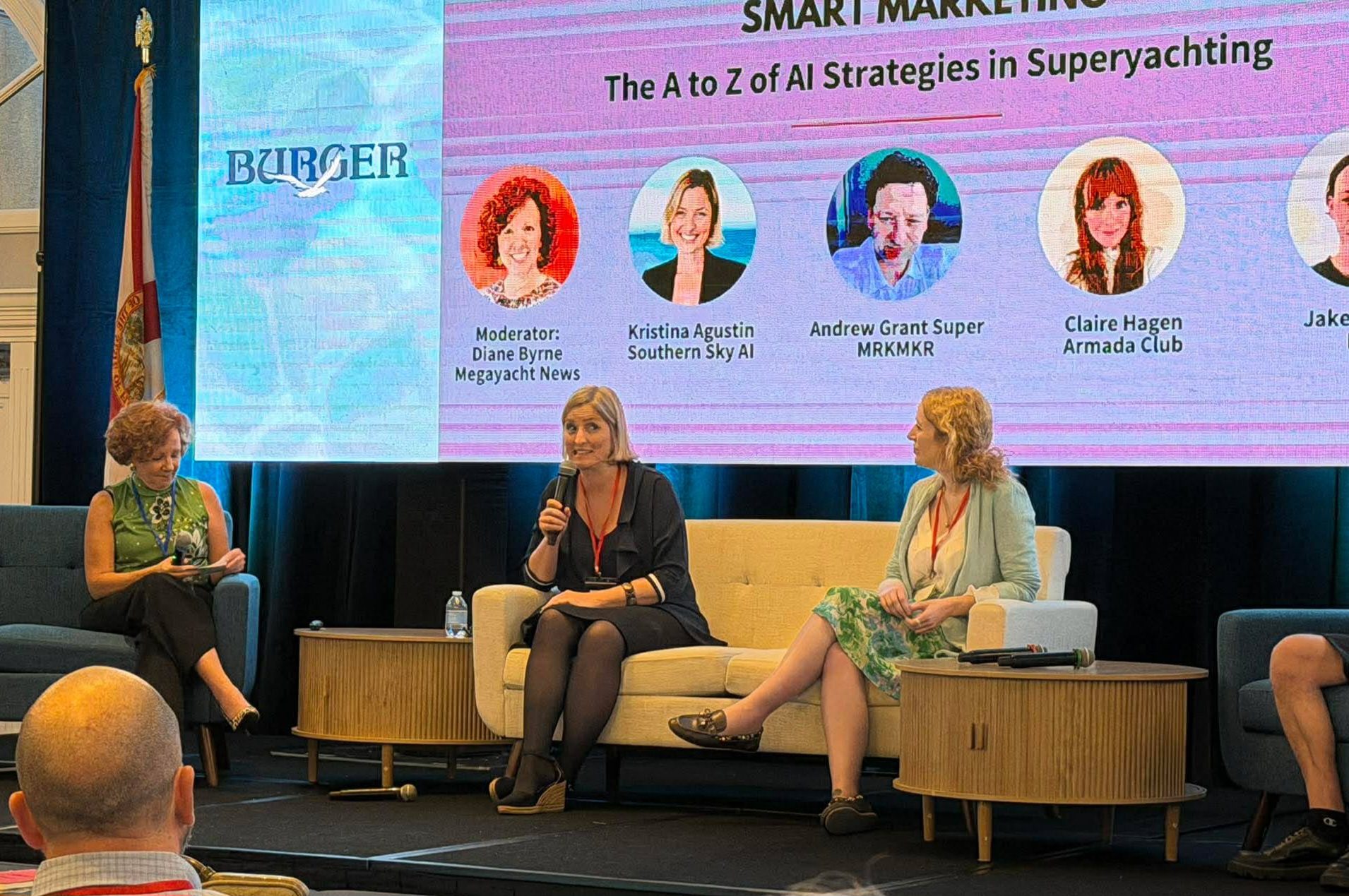
Kristina Agustin, Founder and Principal of Southern Sky AI

Written from inside your world

Kristina Agustin

Founder & Principal Digital Navigator, Southern Sky AI

20+ years in international superyacht and maritime operations. Legally trained (LLB, Graduate Diploma of Legal Practice). AI educator and consultant. ATSE Elevate Scholar 2026.

About Southern Sky AI

Questions

Questions we hear

Whichever your judge has adopted, which is the difficulty. There is no single federal rule; there are standing orders and local rules court by court, with your state bar's ethics opinion and ABA Formal Opinion 512 underneath. A written office policy with a verification step is the one answer that satisfies all of them at once, and it is what your malpractice carrier's questionnaire asks for in any event.

Start with where you stand.

The AI Baseline Report reads your position in about five minutes, and your answers pre-fill everything that follows.

Run the Baseline

Already know where you stand? Governance Essentials puts your position in writing inside 30 days.